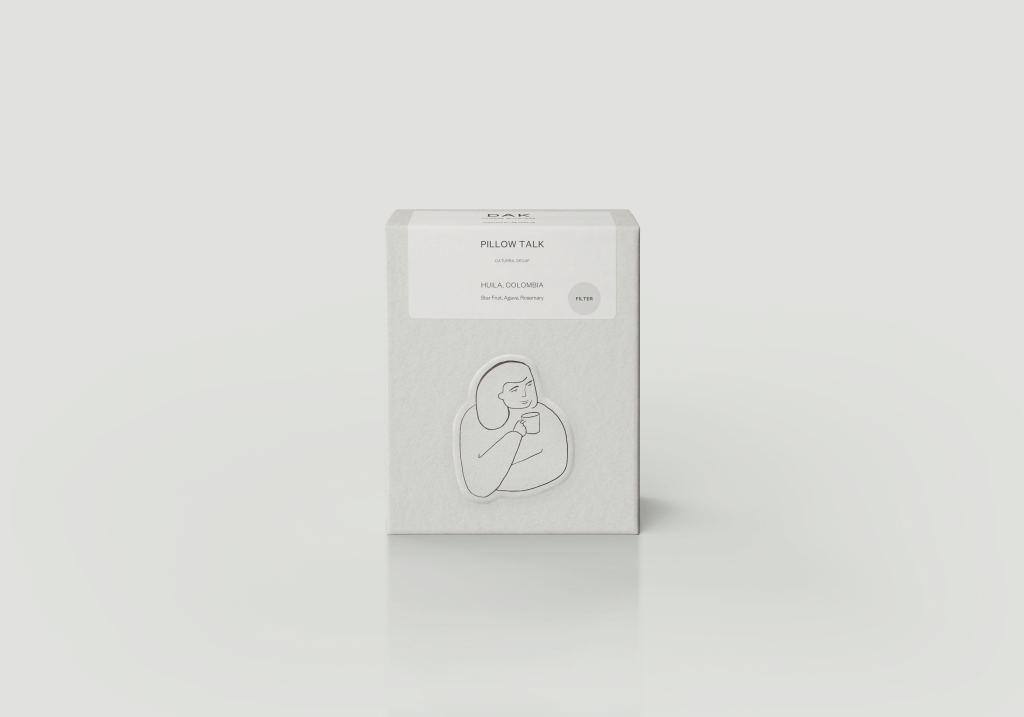
Pillow Talk
BrightUnusual
Los Nogales does decaf a little differently. This Caturra is grown, processed and decaffeinated at the farm in Pitalito, giving Oscar Hernandez and his team control over the coffee from cherry to finished decaf. It’s bright and sweet, with starfruit, agave and rosemary. A decaf we’d happily drink whether we were looking for one or not. *Due to the decaffeination process, the beans may have an unusual colour. This is completely normal and does not affect the quality of the coffee.
Origin Colombia
Region Huila
Producer / Farm Produced by Oscar Hernandez
Harvest 2026
Tasting notes Raspberry, Rosemary, Honey
Altitude 1870masl
Varietal Caturra
Process Decaf
Intervention Level High
For important shipping information, please visit our Shipping & Returns page for detailed information and policies.
From Origin to Cup
Los Nogales is run by Oscar Hernandez in Pitalito, Huila, and has become a centre for coffee processing and experimentation. They have their own wet and dry mills, fermentation and quality labs, and even their own decaffeination station. This Caturra is grown, processed and decaffeinated at origin, going from a 24-hour cherry fermentation through washing and drying before the caffeine is removed. The cup stays bright and sweet, with starfruit, agave and rosemary.

Origin
Los Nogales sits in Pitalito, Huila, between 1870 and 2000 masl. Run by Oscar Hernandez, it forms part of a three-farm project alongside Finca Nahui and Finca Neblina. The team works with controlled drying, fermentation and soil management, with much of the processing happening directly on the farm.
Varietal
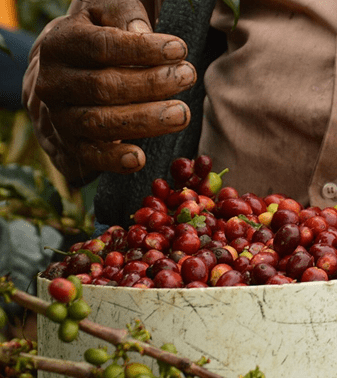
Caturra, a compact variety widely grown in Colombia. For this lot, fully ripe cherries are selectively handpicked before being floated and fermented. In the cup, we find starfruit and agave sweetness, with a fresh rosemary note behind it.
Processing
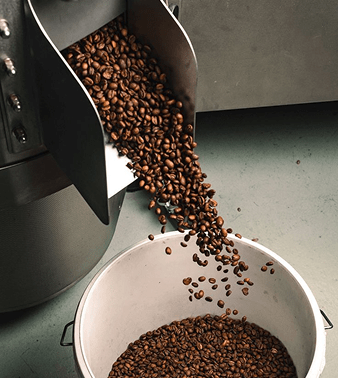
The cherries are floated, fermented for 24 hours, washed and sun dried before hulling. The coffee is then immersed twice in 40°C water for four hours, followed by a 24-hour soak with a natural solvent derived from coffee pulp or husk. Finally, it is washed again and dried for around five days.
Intervention level
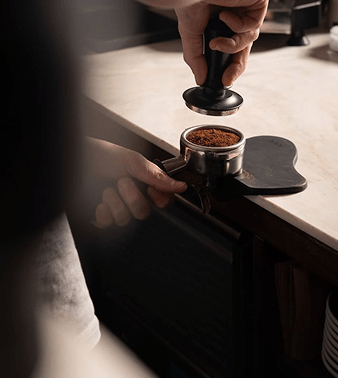
High. The coffee goes through both its original washed process and a second series of steps to remove the caffeine, including hot-water immersion and a coffee-pulp-derived solvent. What makes this lot particularly interesting is that the entire process happens at Los Nogales, giving the team control from cherry through to finished decaf.